How to Use an Electric Pizza Oven
Plug the oven in, preheat it with the stone inside to its top temperature, slide the pizza onto the hot stone, and bake it for 4 to 6 minutes. Watch through the window and pull it when the crust browns and the cheese bubbles.
On this page (8 sections)
- How do you set up an electric pizza oven before the first bake?
- How do you stretch and top the dough so it launches cleanly?
- How do you launch the pizza and set the heat?
- How long does a pizza take, and how do you know it's done?
- How do you handle back-to-back pizzas and different styles?
- What goes wrong on a first bake, and how do you fix it?
- How do you clean and care for an electric pizza oven?
- Which electric pizza oven should you pick?
Plug the oven in, preheat it with the stone inside to its top temperature, slide the pizza onto the hot stone, and bake it for 4 to 6 minutes. Watch through the window and pull it when the crust browns and the cheese bubbles.
If you've never used one, the routine is simpler than a full kitchen oven. The whole trick is heat: get the stone very hot, work fast, and don't open the lid more than you need to.
This guide walks through the steps for how to use an electric pizza oven from first preheat to the last slice.
How do you set up an electric pizza oven before the first bake?
Unbox it, put the stone inside, and give the oven a burn-off run before any food goes near it. Most makers advise a short empty preheat to clear manufacturing residue, and your manual spells out the exact time.
Place the oven on a stable, heat-safe counter with the clearance the maker asks for. Don't tuck it under low cabinets or beside curtains.
If it ships with a peel, a pan, or two peels like the Piezano, keep them within reach so you aren't hunting mid-bake.
The stone matters more than anything else. A cold stone pulls heat out of the base and leaves you with a pale, soft bottom.
Once the stone is seated and the oven is plugged into a standard outlet, you're ready to preheat.
Make sure that outlet is a standard 120V one. The Piezano draws 1200W, and the Chefman runs at 1700W, so both want a normal kitchen circuit rather than an extension cord strung across the room.
The Piezano also has non-slip suction-cup feet, which keep it from sliding around while you launch a pie.
How long should the preheat take?
Allow 20 to 30 minutes at full heat, or however long your maker states. The Cuisinart heats from 350°F to 700°F in 20 to 30 minutes, which is a useful benchmark for a countertop unit.
Don't trust the dial alone. Give the stone extra time after the oven says it's ready, because the stone lags behind the air.
A heat gun or an infrared thermometer pointed at the stone tells you when it's genuinely hot.
How do you stretch and top the dough so it launches cleanly?
Shape the dough on a floured surface, then move it to a floured peel and top it there. Skip this order and the pie will stick, tear, or land in a heap on the stone.
- Let the dough come to room temperature so it stretches without snapping back.
- Press and stretch it to a 12-inch round, or the size your oven fits.
- Dust the peel with flour or semolina and shake it to check the dough slides.
- Add sauce and toppings sparingly so the base stays firm.
- Shake the peel again right before launch.
Keep the sauce light. A wet pie steams its own base and turns soggy, which is the most common first-bake mistake.
If the dough sticks, lift the edge and toss a little more flour underneath rather than forcing it.
Which oven suits a first-time user?
The Piezano 12 inch electric is the easiest starting point for most people. It heats to 800°F, cooks a fresh 12-inch pizza in under 6 minutes, and runs on 1200W from any standard 120V outlet.
Two wooden peels and a scraper come in the box.
The dual knobs let you brown the cheese and crisp the base separately. That control is handy while you learn how your dough behaves.
It's also light, at about 8 pounds, so you can move it to the patio. At roughly 14 inches across it fits in small kitchens, and a built-in thermometer on the lid shows the temperature without opening the oven.
How do you launch the pizza and set the heat?
Open the door, slide the peel in flat, and pull it back so the pizza settles onto the stone. Then close the door and leave it alone for the first few minutes.
Set the oven to its top heat for a Neapolitan-style pie. Lower it a notch for a thicker crust so the middle cooks before the edges burn.
If your model has presets, use them as a starting point rather than a rule.
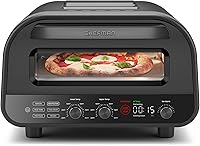
The Chefman offers five touchscreen presets: Neapolitan, New York, Thin-Crust, Pan, and Frozen. Each sets a temperature curve for that style.
Manual mode is there when you want to dial in your own heat.
Its elements range from 300°F to 800°F and hold heat for back-to-back baking. A double-paned window lets you watch without opening the door.
That's a real help when you're learning to time a bake.
How long does a pizza take, and how do you know it's done?
Expect 4 to 6 minutes for a fresh 12-inch pie at high heat, and judge doneness by look and smell, not the clock. The crust should be spotted brown underneath and the cheese bubbling.
Use the window. When the rim darkens and the cheese starts to blister, it's close.
Rotate the pizza halfway through if your oven browns unevenly.
The Cuisinart cooks a 12-inch Neapolitan in 5 minutes or less and has a large viewing window plus an interior light. The light makes it easier to check the base color without opening the door and losing heat.
Its temperature range runs 350°F to 700°F. It also includes a deep-dish pan and a peel, so you can try Detroit and New York styles as well as thin crust.
An independent countdown timer helps you keep track when you're running several pies. A cooking guide printed on the unit gives you a quick reference for temperatures without digging out the manual.
How do you handle back-to-back pizzas and different styles?
Let the stone recover for 2 to 3 minutes between pies and keep the door shut while you prep the next one. A hot stone keeps its heat well, so the second bake often runs faster than the first.
For deep dish or pan pizza, use the pan that came with the oven and drop the heat. These styles need a longer, gentler bake so the thick base cooks through.
Thin crust and Neapolitan want the top heat.
The Cuisinart's deep-dish pan is sized for its 12-inch stone, so a Detroit or pan pie can go straight from the counter to the oven without hunting for the right tin. Keep the dough slightly thicker in the pan and give it the extra minutes it needs.
Electric ovens are the most predictable option for indoor use. If you're weighing one against gas or wood, our guide to are electric pizza ovens worth it covers the trade-offs in more detail.
A budget pizza oven can also be a smart way to try the routine before you spend more.
What goes wrong on a first bake, and how do you fix it?
Most first-bake problems come down to a cold stone, too much topping, or opening the door too often. Fix the heat and the technique and the crust improves right away.
A soggy bottom usually means the stone wasn't hot enough or the dough was too wet. A burnt top with a raw middle means the heat was too high for the crust thickness.
A stuck pizza usually means the peel wasn't floured.
Don't open the lid to peek. Every opening drops the temperature and slows the bake.
Trust the window and give the pie its full few minutes.
How do you clean and care for an electric pizza oven?
Let it cool completely, brush off the stone, and wipe the outside with a damp cloth. Never dunk the oven or the stone in water.
Scrape burnt bits off the stone with a plastic scraper, then wipe it with a barely damp cloth. Skip soap on the stone, since it soaks in.
Wipe the glass with a soft cloth once it's cool.
Keep the cord and outlet dry.
If the stone cracks, replace it before the next bake. A removable stone, like the ceramic one in the Piezano, lifts out so you can clean it without reaching into a hot cavity.
Which electric pizza oven should you pick?
For most people, the Piezano 12 inch electric is the pick, because it heats to 800°F, cooks in under 6 minutes, and ships with two peels. Its dual knobs give you separate control over the top and bottom heat.
Choose the Chefman if you want preset buttons for common styles and a double-paned window that keeps heat in. Choose the Cuisinart if an interior light and a deep-dish pan matter for the styles you plan to bake.
If you're still weighing an electric unit against gas, our roundup of pizza ovens for grills and propane pizza ovens shows what the outdoor options offer.
The routine is the same once you know how to use an electric pizza oven: hot stone, fast launch, short bake, and a little patience between pies. Nail the preheat and the rest follows.
Frequently asked questions
Do I need to preheat the stone before baking?
Yes. The stone needs to be fully hot before the dough touches it, or the base steams instead of crisping.
Let the oven run at full heat for 20 to 30 minutes so the stone soaks up that heat, then slide the pizza in quickly.
How do I stop the pizza from sticking to the peel?
Dust the peel with flour or semolina and shake it after each topping so the dough stays loose. Build the pie fast and launch it within a minute or two, because a wet dough sitting on the peel will stick.
Can I cook frozen pizza in an electric pizza oven?
Yes, and the Chefman has a dedicated Frozen preset for it. Let the base thaw for a few minutes first so the middle cooks through before the edges char, and use the stone rather than a pan.
How many pizzas can I bake back to back?
The Chefman's double-paned window and high-heat design keep the oven hot enough for several pies in a row. Give the oven 2 to 3 minutes to recover between pizzas, and keep the door closed while you prep the next one.
Is an electric pizza oven safe to use indoors?
It is, as long as you follow the maker's clearance instructions and keep it on a heat-safe counter with space around it. Don't put it under low cabinets or near curtains, and use the cool-touch handle rather than grabbing the lid.