Chefman vs Big Horn Indoor Pizza Oven: Which Is Better? (October 2026)
In the Chefman vs Big Horn pizza oven comparison, choose Big Horn for pizzas up to 14 in and a higher heat ceiling, or Chefman for a smaller 12 in oven with touchscreen presets. Check counter and storage space before deciding.
On this page (10 sections)
- Chefman vs Big Horn Indoor Pizza Oven: Which Is Better?
- Chefman vs Big Horn pizza oven: what are the main differences?
- Which oven suits your pizza size?
- Which oven reaches the heat you want?
- Which controls fit your cooking style?
- What comes with each pizza oven?
- How should you set up and care for either oven?
- What common mistakes should you avoid?
- Should you choose Chefman or Big Horn?
- FAQ
Chefman vs Big Horn Indoor Pizza Oven: Which Is Better?
Big Horn suits cooks who want pizzas up to 14 in and a maximum temperature of 850°F; Chefman suits cooks who prefer a smaller 12 in oven with touchscreen presets. In this chefman vs big horn pizza oven comparison, your pizza size, counter plan and preferred controls make the decision.
Chefman measures 17 in wide, 18.7 in deep and 10.94 in high. Big Horn measures 18.86 in wide, 20.31 in deep and 10.44 in high, and its flip-up design reduces its footprint by 50% for storage.
Both are electric countertop ovens with a pizza stone and peel included. Big Horn has the larger pizza capacity and wider temperature range, while Chefman has touchscreen controls and a smaller fixed footprint.


Chefman vs Big Horn pizza oven: what are the main differences?
Big Horn favors larger pies and a broader temperature range; Chefman favors a compact footprint and touchscreen presets. Use the comparison below to see which tradeoffs matter in your kitchen.
| Feature | Big Horn 14 inch indoor | Chefman indoor pizza oven |
|---|---|---|
| Pizza size | 14 in | 12 in |
| Temperature range | 220–850°F | 300–800°F |
| Presets | 6 programs | 5 touchscreen presets |
| Controls | Knob control | Touchscreen |
| Dimensions | 20.31 x 18.86 x 10.44 in | 18.7 x 17 x 10.94 in |
| Included | 14 in stone, peel | Pizza stone, peel |
| Product | Best for | Pizza size | Temperature range | Controls | Our score |
|---|---|---|---|---|---|
| Big Horn 14 inch indoor | larger pizza nights | 14 in | 220–850°F | Knob control, 6 preset programs | 8.1 |
| Chefman indoor pizza oven | touchscreen cooks | 12 in | 300–800°F | Touchscreen, 5 presets | 8.0 |
Dimensions are given as depth, width and height. Measure the space you plan to use, including clearance for the door and enough room to handle a peel safely.
Which oven has more useful controls?
Chefman offers 5 touchscreen presets and a Manual setting, while Big Horn offers 6 programs with knob control. The better setup depends on whether you prefer choosing a named pizza style or setting the oven yourself.
Chefman's presets are Neapolitan, New York, thin-crust, pan and frozen. Big Horn's programs are Manual, Wood Fired, Frozen, New York, Thin Crispy and Deep Dish, with a temperature range that starts lower.
Preset names can give you a quick starting point, but they don't replace your recipe. Dough thickness, toppings and your preferred crust may call for adjustments as you cook.
Which oven suits your pizza size?
Big Horn is the fit for pies up to 14 in; Chefman is the fit if 12 in pizzas cover your usual meals. Match the oven size to the pies you actually make and the counter you can give it.
A larger pizza needs room for dough shaping, topping and turning or removing the pie. Measure the oven footprint, but also picture the peel moving between your prep area and the oven.
Our guide to choosing a 12 in or 16 in pizza oven explains how pizza size affects serving and handling. If you tend to make smaller pies, a 14 in capacity may be more oven than your routine needs.
Is Big Horn's larger pizza size worth the counter space?
Big Horn's 14 in capacity is useful for cooks who regularly make larger pies or want more room for toppings. Its footprint is larger when set up, but its flip-up design reduces its footprint by 50% for storage.
Chefman takes up less width and depth, so it is the simpler choice when the oven will remain on the counter. Its 12 in capacity still gives you room for a personal or small shared pizza.
Measure the work area before choosing either one. Leave a safe place to set down the peel and follow the oven's instructions for placement and clearance.
Which oven reaches the heat you want?
Big Horn reaches 850°F and starts at 220°F; Chefman reaches 800°F and starts at 300°F. Choose the range that better fits the recipes and cooking settings you expect to use.
Chefman's upper and lower heating elements adjust from 300–800°F. Big Horn uses upper and lower heating tubes and offers a 220–850°F range with PID temperature control.
A higher maximum can be useful for recipes that call for more heat, while a lower starting point gives more flexibility for lower-temperature cooking. Neither range guarantees a particular crust, since dough, toppings and technique also affect the result.
For more context, read how hot a pizza oven gets. Follow the manual for the right preheat and cooking steps for your oven.
How quickly can each oven cook a pizza?
Big Horn is described as preheating in 15 minutes and cooking a 14 in pizza in 3 minutes. Chefman is described as heating rapidly and retaining heat for back-to-back pizzas, but no specific cooking time is given.
Treat the Big Horn time as a guide rather than a promise for every pie. Thickness, toppings and settings affect how long a pizza needs, so keep an eye on the first pie and adjust your approach.
Chefman's heat retention is aimed at making multiple pizzas in succession. If you plan a group meal, prepare the next pie before the first finishes so you can work efficiently.
Which controls fit your cooking style?
Choose Chefman for touchscreen selection or Big Horn for knob control and a wider set of named programs. Either oven also offers a Manual option when you want to adjust settings yourself.
Chefman's programs cover Neapolitan, New York, thin-crust, pan and frozen pizza. Big Horn's include Wood Fired, Frozen, New York, Thin Crispy and Deep Dish, in addition to Manual.
If you often cook from a set recipe, Manual mode gives you a direct way to choose settings. If you prefer a quick starting point, the preset names can make it easier to select a style without scanning a long menu.
What comes with each pizza oven?
Both ovens include a pizza stone and peel, so you can start with the basic tools for moving and baking pies. Big Horn's stone is sized for its 14 in pizzas, while Chefman is designed for 12 in pies.
A peel needs enough clearance to move a topped pizza without catching the oven opening. Before adding another peel or stone, check that it fits the oven and leaves room for safe handling.
For upkeep, see how to clean a pizza oven stone. Follow the care directions included with your oven, since the stone and oven surfaces need different handling from ordinary cookware.
How should you set up and care for either oven?
Set up the oven on a suitable counter, check the available outlet, and follow the manual before the first cook. BIG HORN specifies a 110–120V supply, and Chefman lists 120V and 1700W.
Leave working room around the oven for the door, peel and hot food. Keep the prep surface clear, and decide where a hot pizza or peel can rest before switching the oven on.
Let the oven and stone cool before cleaning or moving them. Big Horn has a removable stone, which can be taken out for cleaning; use the oven's directions for any residue and avoid treating the hot stone like a washable pan.
Use a peel suited to the pizza size and transfer one pie at a time. Topping a pie heavily or leaving loose flour on the peel can make launching harder, so keep the dough manageable and practice with a simple topping combination first.
What common mistakes should you avoid?
The main mistakes are choosing by maximum temperature alone, ignoring clearance and assuming presets guarantee a preferred crust. A little planning makes either oven easier to use.
First, don't buy Big Horn's larger format just for the higher heat if you rarely make large pizzas. A smaller pie and a more compact counter setup may make Chefman a better fit.
Second, measure depth as well as width. The oven must fit the counter, and you still need a safe place to work with the peel and set down food.
Finally, avoid overloading the first pie with toppings or changing several settings at once. Start with a recipe's guidance, use the oven's directions, then adjust one factor at a time to learn what suits your dough.
Should you choose Chefman or Big Horn?
Choose Big Horn if you want pizzas up to 14 in, a 220–850°F range and storage that can use its flip-up design; choose Chefman if you want 12 in pizzas, touchscreen presets and a smaller fixed footprint. Skip Big Horn if you lack room for its larger setup or won't use the extra pizza capacity, and skip Chefman if you need a 14 in pizza surface or a higher maximum temperature.
Big Horn is the stronger match for a household that makes larger pies, wants a wider temperature range and values the additional cooking programs. Chefman is the more straightforward match for cooks who want named touchscreen presets and don't need more than a 12 in pizza.
For another electric option, compare the Ooni Volt 2 and Piezano XL 14 inch electric. If the bigger question is where you cook, the indoor vs outdoor pizza oven guide can help you choose the right setup.
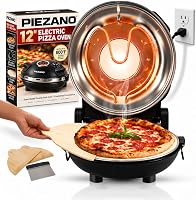
Big Horn 14 inch indoor
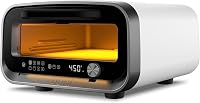
Chefman indoor pizza oven
FAQ
Is Chefman or Big Horn better for a small kitchen?
Chefman has the smaller fixed footprint, at 17 in wide and 18.7 in deep. Big Horn is 18.86 in wide and 20.31 in deep, but its flip-up design reduces its footprint by 50% for storage.
Measure the counter and storage spot separately. Choose Chefman if the oven will stay out and the smaller footprint helps; consider Big Horn if you can store it after use.
Which indoor pizza oven fits a larger pizza?
Big Horn fits pizzas up to 14 in, while Chefman is designed for pizzas up to 12 in. The larger surface suits family-style pies, but it also needs more room for the peel and nearby prep.
Check your usual dough size and serving plan before choosing. A larger oven isn't useful if you mostly make smaller pies or lack counter space.
Does Chefman or Big Horn get hotter?
Big Horn reaches 850°F, while Chefman's range tops out at 800°F. Big Horn also starts at 220°F, compared with Chefman's 300°F minimum.
Pick by the heat range your recipes call for, then follow the manual's preheat and cooking guidance. Heat settings alone don't determine the crust; dough, toppings and technique matter too.
Do Chefman and Big Horn include a pizza peel?
Both ovens include a pizza peel and a pizza stone. Big Horn's stone is 14 in, while Chefman is designed for pizzas up to 12 in.
Use a peel that fits the opening and gives you room to handle the pie. Before buying replacement accessories, check their size against the oven and the instructions.
Can these ovens cook food other than pizza?
Big Horn is described for bread, cakes, pies, baguettes and chicken wings as well as pizza. Chefman's cooking options are centered on pizza presets, including Neapolitan, New York, thin-crust, pan and frozen, plus Manual mode.
Check each oven's instructions for cooking guidance and suitable cookware. Don't assume every dish or pan is safe at high heat.
Frequently asked questions
Is Chefman or Big Horn better for a small kitchen?
Chefman has the smaller fixed footprint, at 17 in wide and 18.7 in deep. Big Horn is 18.86 in wide and 20.31 in deep, but its flip-up design reduces its footprint by 50% for storage.
Measure the counter and storage spot separately.
Choose Chefman if the oven will stay out and the smaller footprint helps; consider Big Horn if you can store it after use.
Which indoor pizza oven fits a larger pizza?
Big Horn fits pizzas up to 14 in, while Chefman is designed for pizzas up to 12 in. The larger surface suits family-style pies, but it also needs more room for the peel and nearby prep.
Check your usual dough size and serving plan before choosing.
A larger oven isn't useful if you mostly make smaller pies or lack counter space.
Does Chefman or Big Horn get hotter?
Big Horn reaches 850°F, while Chefman's range tops out at 800°F. Big Horn also starts at 220°F, compared with Chefman's 300°F minimum.
Pick by the heat range your recipes call for, then follow the manual's preheat and cooking guidance.
Heat settings alone don't determine the crust; dough, toppings and technique matter too.
Do Chefman and Big Horn include a pizza peel?
Both ovens include a pizza peel and a pizza stone. Big Horn's stone is 14 in, while Chefman is designed for pizzas up to 12 in.
Use a peel that fits the opening and gives you room to handle the pie.
Before buying replacement accessories, check their size against the oven and the instructions.
Can these ovens cook food other than pizza?
Big Horn is described for bread, cakes, pies, baguettes and chicken wings as well as pizza. Chefman's cooking options are centered on pizza presets, including Neapolitan, New York, thin-crust, pan and frozen, plus Manual mode.
Check each oven's instructions for cooking guidance and suitable cookware.
Don't assume every dish or pan is safe at high heat.