Are Wood-Fired Pizza Ovens Worth It?
Yes, a wood-fired pizza oven is worth it if you cook outdoors often and want 60-second pizza with real smoke flavor. It is not worth it for occasional bakers or small patios, where the fuel load, heat-up time and tending outweigh the payoff.
On this page (9 sections)
- What does "worth it" mean for a wood-fired pizza oven?
- How does a wood-fired oven actually cook a pizza?
- How much tending does a wood oven need?
- What does a wood-fired oven cost to own?
- Is a wood-fired oven hard to learn to use?
- Gas or wood: which is worth it for you?
- Which wood-fired oven setup is worth it for a first oven?
- When is a wood-fired oven not worth it?
- How should you decide whether to buy one?
Yes, a wood-fired pizza oven is worth it if you cook outdoors often and want 60-second pizza with real smoke flavor. It is not worth it for occasional bakers or small patios, where the fuel load, heat-up time and constant tending outweigh the payoff.
The honest answer sits between the two. A wood oven does something a kitchen range cannot, but only when you actually use it.
Here is how to tell whether you are that buyer.
What does "worth it" mean for a wood-fired pizza oven?
Worth it means the oven earns its space and its fuel. A wood oven pays off when you bake pizza often, have somewhere to store and light it, and enjoy tending a live fire.
Three things decide it: how often you cook outside, how much you value the wood flavor, and whether you have a dry spot to keep the oven. A backyard oven also takes time to heat and feed.
If those are chores to you, the math does not work.
A gas oven heats faster and cooks just as hot. Wood costs more in fuel and attention.
The extra you pay buys flavor and the cooking experience, not raw speed. So the question is really whether smoke flavor and live fire are worth more to you than convenience.
How does a wood-fired oven actually cook a pizza?
It cooks by stored stone heat plus direct flame. The stone floor holds heat near 950°F, so the base crisps in seconds while the flame chars the top, and the whole pie finishes in about 60 seconds.
Wood burns at the back or side of the dome. Flames roll over the top, and the thick stone floor holds the heat under the base.
You slide the pizza in, turn it once or twice with a peel, and pull it when the crust is spotted.
That is the same method a commercial pizzeria uses. Gozney says its ovens hit 950°F and cook in just 60 seconds, and its portable Roccbox uses a thick stone floor and dense insulation to hold that heat.
The live fire also adds smoke, which a plain kitchen oven cannot.
How much tending does a wood oven need?
Plan on steady feeding for the whole session. You light a small fire, build it up for 20 to 30 minutes, then add a split log or two between pizzas to keep the floor hot.
A wood oven is not set-and-forget. Someone needs to watch the fire, keep the flames rolling, and sweep ash away from the cooking area.
The first pie of the night arrives after the warm-up, not before it.
That is the trade-off against gas. A gas burner lights with a click and holds a steady temperature.
Wood asks for attention but rewards you with smoke and a live flame. If you host big pizza nights with friends, the tending becomes part of the evening rather than a chore.
For the lighting sequence itself, our guide to how to light a wood fired pizza oven walks through the small-fire build.
What does a wood-fired oven cost to own?
The oven is only part of the spend. Fuel, a peel, a thermometer and weather cover add up, so price the whole kit before you decide.
Wood is cheap per session but needs dry storage; gas costs more per cook. A bag of splits burns through quickly in a hot oven.
Gas costs more per cook but needs no stacking. A dual-fuel oven lets you pick whichever fuel fits the night.
Accessories matter more than people expect. A turning peel lets you rotate the pie without burning your arm.
An infrared thermometer tells you when the stone is ready. Budget for those with the oven rather than adding them later.
Is a wood-fired oven hard to learn to use?
No, the basic rhythm is simple. You need two skills: reading the stone temperature and turning the pizza fast enough, and both come with a couple of sessions.
The first challenge is knowing when the floor is hot. An infrared thermometer takes the guesswork out.
The Ooni digital infrared thermometer reads surface temperature in under 300 milliseconds, and Ooni says it is calibrated for the cordierite stones used in its ovens. An adjustable setting lets it read steel too.
The second skill is the turn. A perforated peel lets flour fall away before the pizza lands and gives you a light tool for rotating it as it cooks.
The SHANGPEIXUAN set includes a 9 inch round turning peel, a 12 inch rectangular peel, an ash rake and a brush.
The long handles keep your hands clear of a 950°F opening. The perforations reduce loose flour on the stone, which is a common cause of burnt bottoms.
Gas or wood: which is worth it for you?
Gas is the easier first oven; wood is the more rewarding one. Pick gas if speed and control matter most, and pick wood if smoke flavor and the fire are the point.
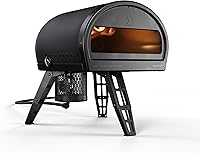
Many buyers end up with dual-fuel ovens so they can start on gas and switch to a wood burner when guests arrive. The Gozney Roccbox is one of them.
It runs on gas with a click and takes an optional wood burner attachment for the rolling flame.
It hits 950°F and cooks a 12-inch pizza in about 60 seconds, and its legs fold away for camping or the backyard. For more choices in each fuel type, see our roundups of the best propane pizza ovens and the pizza oven for grill setups that sit on a gas grill.
Which wood-fired oven setup is worth it for a first oven?
For a first oven, buy a portable dual-fuel model and add a thermometer and turning peel. That gives you a fast gas start, the option of wood smoke, and the tools that stop beginner mistakes.
The Roccbox suits this well. It needs no assembly, its legs unfold, and its stone floor and insulation hold heat for back-to-back pies.
It weighs about 22 kg, so plan where it will live.
If you want a stone floor that turns the pizza for you, read our look at the pizza oven with rotating stone and whether the feature is worth the extra. Either way, a thermometer is the single best add-on for a beginner, because it turns "guess when it's hot" into a number on a screen.
When is a wood-fired oven not worth it?
Skip the wood oven if any of these sound like your setup. You cook pizza a few times a year, you have no dry outdoor space, or you want pizza on a whim without lighting a fire.
Small patios and balconies make a wood oven awkward, since smoke and ash need somewhere to go. Renters may find a built-in oven too permanent.
And anyone who mostly reheats frozen pies gets little from a live fire.
Wood quality also matters. Damp wood smokes instead of burning hot, so you need a covered store.
If you cannot guarantee dry fuel, a gas oven is the more sensible buy.
In those cases the answer to "are wood fired pizza ovens worth it" is no. A gas or dual-fuel oven gives you most of the cooking result without the fuel logistics.
Save the wood oven for when outdoor cooking is already part of your routine.
How should you decide whether to buy one?
Decide by counting your likely pizza nights. If you would light the oven at least twice a month in season, it earns its place; if not, put the money toward a gas model or a good grill instead.
Then match the oven to your space. Measure the spot where it will stand and check the clearance around the dome.
Add the fuel cost for a year and the accessories you will actually use. If the total still feels comfortable, the flavor and the fire are worth it.
For most first-time buyers, the practical route is a portable dual-fuel oven, an infrared thermometer and a turning peel. That kit covers fast weeknight gas bakes and weekend wood-fired pies without forcing a choice up front.
Pick wood when the live fire is part of why you cook outside. Pick gas when it is not.
Either way, the question of whether wood fired pizza ovens are worth it comes down to how often you will light one.
Frequently asked questions
How long does a wood-fired pizza oven take to heat up?
Allow about 20 to 30 minutes of small fires and steady feeding before the stone floor reaches pizza heat. Gas and dual-fuel ovens such as the Gozney Roccbox reach 950°F much faster, so choose wood only if the live fire is part of the fun for you.
Do wood-fired pizza ovens work in cold or wet weather?
Yes, with care. Wood burns hotter and the oven holds heat well, but rain on the dome and wet fuel slow the fire.
Set the oven under cover or use a gas burner, and keep wood in a dry spot before you light it.
Is a wood-fired oven better than a gas pizza oven?
Not for every cook. Wood gives smoke flavor and the live-fire experience, while gas is faster to light and easier to control.
Dual-fuel ovens let you start on gas and switch to a wood burner when you want smoke, so you get both.